Introduction
Being a landscaper means being outdoors in the field, managing equipment, and coping with unpredictable risks, from injury to employees to property damage. This is precisely the reason insurance for small landscaping businesses isn’t only an “nice option to own” It’s an insurance policy which protects your livelihood. Landscapers often do not wait until an accident has occurred to find out if they have coverage but then find out that the cost is higher than what insurance would have cost.
In this article you’ll discover the kinds of insurance landscapers really require, what the coverage generally is, and how to pick a policy that best suits the size of your company. If you’re a sole operator or run a small staff This article explains everything in straightforward, concrete terms.
Why Small Landscaping Businesses Need Insurance
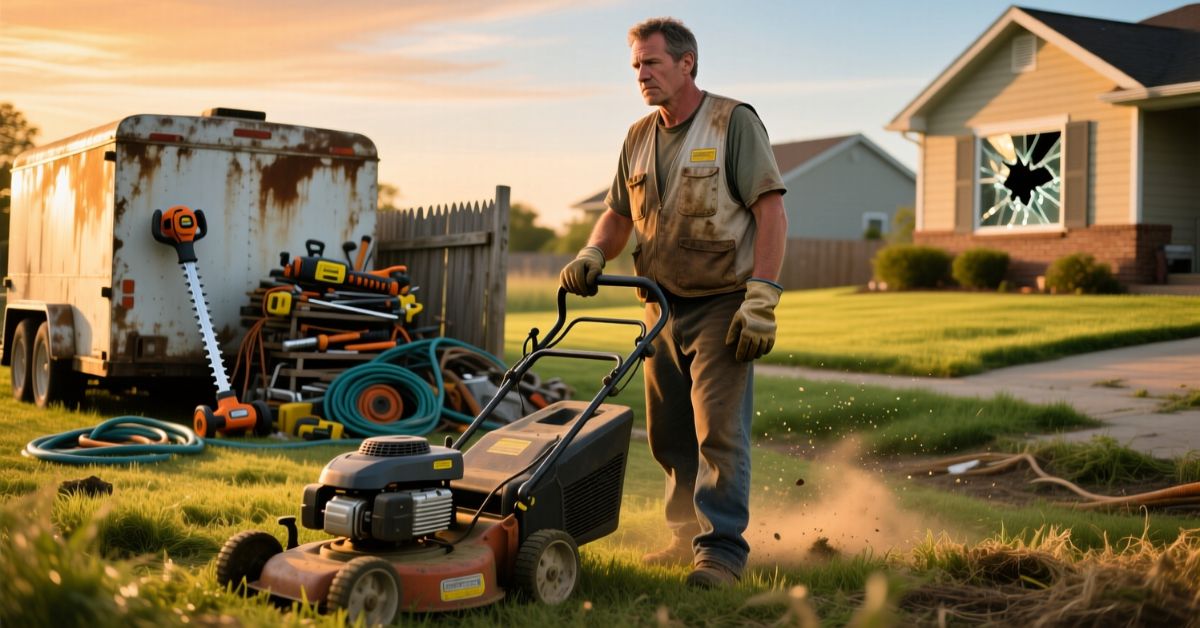
Landscaping might appear low-risk from an outside perspective, but regular jobs could expose homeowners to expensive claims. Examples I’ve observed personally:
- A lawnmowers throws a stone in the window of a customer’s home.
- A worker stretches their back to lift heavy sod
- A trailer is loosened and causes damage to another vehicle.
- A customer claims that your crew has damaged a line of sprinklers
If you don’t have insurance the possibility of any of these events could result in thousands of dollars in out-of-pocket expense, which could close a small company.
Essential Types of Insurance for Small Landscaping Businesses
1. General Liability Insurance
General liability is the most fundamental coverage for landscapers since it covers you in the event that your business results in:
- Property destruction
- Injuries to other people
- Harm to reputation or advertising
If a mower causes damage to the fence of a client or if the mower is damaged by a fall This policy will handle the legal cost such as settlements, medical expenses.
Average Cost: $500 to $1500 per year, based on the size of your business, its the location, and the services provided.
2. Workers’ Compensation Insurance
If you are a member of a group, even just one person, the majority of states have requirements for workers’ compensation. It is a requirement for:
- Medical attention for injured employees
- Loss of wages in recovery
- Legal protection for employees if they decides to sue
Landscaping can have higher rates of injury due to physical work and equipment usage This makes it a necessity to have this coverage.
Average Cost: $2,000 to $6,600 per employee each year (varies significantly by the state and evaluation of experience).
3. Commercial Auto Insurance
Your trailers, trucks, and equipment-hauling vehicles require commercial auto insurance, not auto insurance for personal vehicles.
This insurance provides:
- Car accidents that involve corporate vehicles
- Medical costs, repairs and the liability claims
- Damage or theft to trailers
If you are transporting mowers or trimmers as well as garbage, this rule is designed to protect your fleet as well as your business.
4. Equipment and Tool Insurance
Landscapers depend heavily on equipment and tools. The insurance covers:
- Mowers
- Trimmers
- Blowers
- Hand tools
- Power tools
It protects against vandalism, theft or accidental damage, whether on your vehicle, at the job site, or even in storage.
Average Cost: $200-$800 annually, based on the equipment’s value.
5. Professional Liability
If your business offers landscape plans, suggestions for layout of gardens or consultation, you should have professional liability insurance covers:
- Design errors
- Your advice may have caused financial loss
- Not correct project recommendations
This option is optional, but highly advised for companies that offer more complex design services.
How Much Does Insurance Cost for a Small Landscaping Business?
Small landscaping companies typically will pay between $1,200 and $4,500 annually for an insurance plan. The cost of insurance varies based on:
- Crew size
- Experience level
- Services provided (tree work is more expensive than lawn cutting)
- History of Claims
- Location
- The value of vehicles and equipment
Companies offering stump grinding, tree trimming or pesticide application could have higher costs because of the increased risk.
How to Choose the Right Insurance Provider
1. Look for Insurers Experienced With Trades
Specialized carriers that cover landscaping and service companies know the risks of landscaping more than other generalist insurance companies. This usually results in more precise pricing and better options for coverage.
2. Compare at Least 3 Quotes
The prices can differ significantly between insurance companies. Ask for estimates that cover:
- Limits on liability
- Deductibles
- Values of coverage for equipment
- Car coverage
- Employee count
3. Consider Bundling Policies
Certain carriers have business-owner packages (BOP) which bundle property, liability, as well as business interruption insurance, usually at a lower price.
4. Review Contract Requirements
Commercial clients usually require proof of:
- General liability limits of $1 million
- Workers’ compensation certificates
- Additional insurance endorsements
Check these prior to starting the work to avoid any delays or loss of contracts.
Common Mistakes Landscaping Businesses Should Avoid
- Utilizing personal auto insurance on commercial vehicles
- Invaluing equipment that results in inadequate payments
- Working-comp exemption for part-time workers
- not updating coverage as the company expands
- Inability to save the certificates of subcontractors on file
Making sure to avoid these mistakes could mean a reduction of thousands in unanticipated costs.
Conclusion
Insurance isn’t a mere formality for landscapers. It’s a crucial aspect of running a successful professional, efficient business. If you have the proper policies in place, you’ll be able to protect your company as well as your employees and your brand. Begin with general liability and add workers’ compensation when you have employees, then add insurance for commercial vehicles and equipment depending on the need. The trick is to balance the cost with protection in real-world situations.
If you’ve been thinking about look over your policies, or setting up a landscaping business for the first time it’s the right moment to make sure you’re properly insured.
FAQ’s
1. What kind of insurance should an individual landscaping business with a modest budget require?
Typically, landscapers require general liability insurance, commercial automobile, workers’ compensation (if you employ employees) as well as equipment insurance.
2. How much insurance is required for a landscaping business that is small?
The majority of small landscaping companies have a budget of $1,200 to $4,500 per year depending on the services offered location, equipment, and location.
3. Does general liability cover landscaping?
General liability is crucial however, it is this is not enough if your business has employees or vehicles, or other valuable equipment.
4. Do landscapers have to be paid worker’s compensation?
If you employ workers, even part-time or not, most states legally require it.
Disclaimer:
The content on Gap Insurance Guide is for informational and educational purposes only and is not legal, financial, or insurance advice. While we strive for accuracy and reference trusted sources and news websites, we make no guarantees about the completeness or reliability of the information. Insurance laws and policies vary by state, and individual circumstances differ. Always consult a licensed professional before making decisions. By using this site, you agree that Gap Insurance Guide is not responsible for any actions taken based on this content.