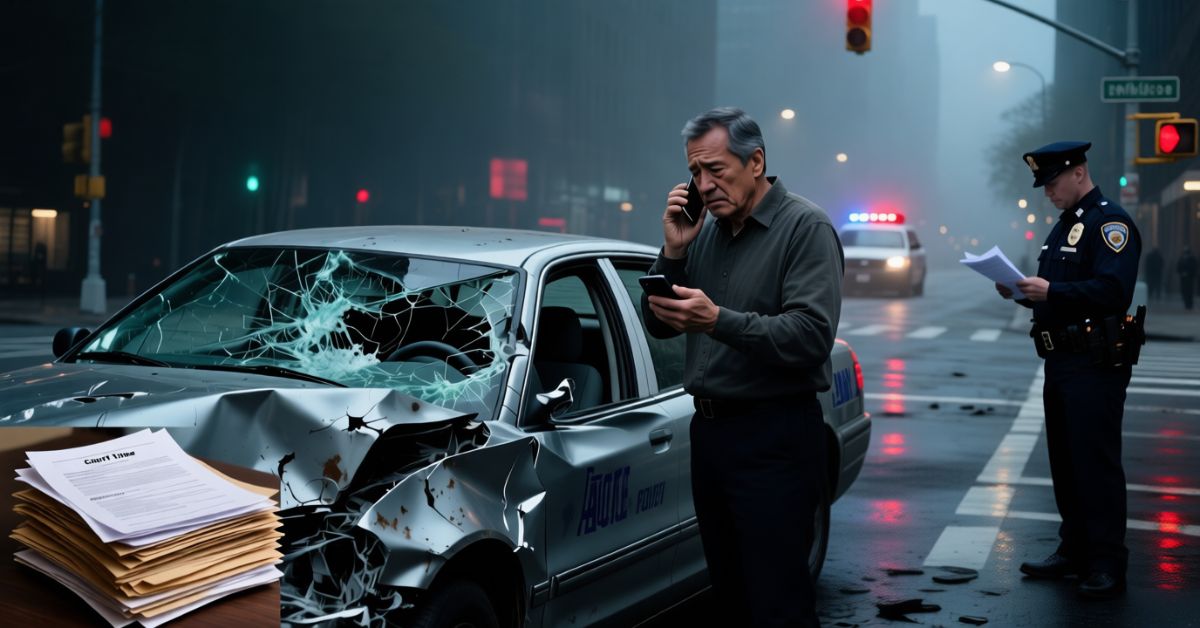
Being involved in the middle of a accident without insurance is among the most stressful situations that a driver may confront. In just a few minutes, you’re faced with panic, damage and guilt, as well as an endless list of “what will happen next?” questions. If you’re not covered and the consequences are overwhelming. But the more you are aware of what your legal rights are and obligations the easier it will be to control your life.
This guide will explain the specifics of what you should do following an accident if you do not have insurance as well as the risks to your finances and legality and how the states deal with the situation, and what are your most effective options to safeguard your finances and your driving license.
What Happens If You Have a Car Wreck Without Insurance?
If you’re driving with no insurance and have been involved in a crash the majority of states will treat it as an traffic offense-and occasionally it’s a civil liability problem. The penalties vary and can comprise:
1. You May Be Held Financially Responsible
In the absence of insurance it is your responsibility to pay for:
- Injuries to the driver’s vehicle
- Medical bills
- Unemployment
- Property destruction
- Your vehicle’s repairs (if you have any)
If the injury is severe it could result in several thousand dollars, or even a an amount that is six figures..
2. You May Receive State Penalties
In accordance with your state the penalties for driving without insurance could include:
- Fines ranging from $200 to $5,000
- License suspension
- Vehicle impound
- SR-22 requirements (high-risk insurers filing)
- Court costs
3. You Could Be Sued
If you’re the one to blame and you are unable to pay for the damage privately or through insurance, the other party could start a civil lawsuit.
In some states, courts have the power to garnish wages or put the holder of assets with a lien.
Step-By-Step: What to Do Immediately After an Accident When You’re Uninsured
Even in the event that you don’t have insurance, you still must comply with the law regarding accidents. This is the most efficient method of doing it:
1. Check for Injuries and Call 911
Your status as uninsured is not alter safety guidelines.
Medical help plus a police report will protect your legal rights.
2. Do NOT Admit Fault at the Scene
Stay true to the facts.
Even saying “I’m sorry” could be used as an admission of guilt later on.
3. Collect Evidence
Gather:
- Photos of both vehicles
- Road conditions
- Witness contact
- Dashcam footage
- Plate number and driver’s license of the driver who is driving
This is vital to protect you in the event that the fault is not disputed.
4. Request a Police Report
The police report serves as a formal record.
Without insurance the report is crucial when the case is taken to the court.
5. Exchange Information Properly
Provide:
- Driver’s license
- Registration of vehicles
Legally, you are required to share information, even if you don’t have insurance.
6. Cooperate-But Don’t Overshare
There is no requirement to sign up:
- The reason you don’t have insurance
- Financial details
- Previous violations
Only state what is necessary.
Who Pays for Damages in a Car Wreck Without Insurance?
The amount of responsibility for costs varies based on the fault, state laws and the nature of the accident.
If You Were at Fault
You are responsible for everything. Not just auto repairs but
- Medical bills
- Legal costs
- The other driver’s wages were not paid. driver
- Towing and recovery costs
This is the reason why crashes that do not have insurance can be financially risky.
If You Were Not at Fault
The insurance of the other driver could cover:
- Liability insurance
- Collision coverage
Some states do are governed by “No Pay Play, no Play” statutes which means drivers without insurance can’t claim certain damages regardless of whether they were in fault.
This includes states such as:
- Louisiana
- Alaska
- Iowa
- Kansas
- Michigan
- Missouri
- New Jersey
- North Dakota
- Oregon
- Tennessee
You could lose rights to:
- Payments for pain and suffering
- Non-economic damage
If Both Drivers Are Uninsured
Parties can discuss privately or settle through a court.
State-by-State Consequences for Uninsured Drivers
Although every state is unique the consequences typically are categorized into three types:
1. Financial Penalties
Fines can vary from:
- $100-$500 (low)
- up of $5,000 (high-penalty states)
2. SR-22 or FR-44 Requirement
Certain States (Virginia, Florida, California, Texas) may require you to have the an SR-22 certification for a period of 3 to 5 years to prove you have high-risk insurance.
3. License & Registration Suspension
A lot of states ban:
- Your license
- Your account
- Your plates
Refundation fees are often a factor.
If someone gets injured and you’re not insured the penalties can be much harsher.
How to Handle Costs After a Car Wreck Without Insurance
Here are the real-world alternatives to limit financial loss:
1. Negotiate a Private Settlement
If the incident is not serious Some drivers would rather handle repairs on their own to avoid:
- Increase in insurance claim
- Legal complexities
- Court involvement
Make sure everything is in written form and with both parties signing it.
2. Set Up a Payment Plan
Many bodies shops, lawyers and other drivers will accept payment plans if the non-insured party will accept cooperation.
3. Hire an Attorney
An attorney for car wrecks can help in the following situations:
- Injuries can be in the mix
- You’re being sued
- The other driver disputes the fault.
- Costs exceed $5,000
Legal advice prevents you from entering into harmful agreements.
4. File for State Financial Responsibility Solutions
Certain states provide:
- Hardship reinstatement
- Certificates of financial responsibility for alternative sources
- Options for payment of fines
5. Fix Your Insurance Status Immediately
When a crash has entered your system need to obtain:
- A new policy
- The SR-22 filing (if required)
The consequences of driving without insurance are also higher. the penalties dramatically.
How to Get Affordable Insurance After Driving Uninsured
Even if you’ve been in a wreck it is possible to find alternatives that are budget-friendly, like:
- High-risk insurance companies
- State-sponsored programs
- Insurance based on usage (pay by mile)
- Basic liability-only insurance
To reduce premiums:
- Raise deductibles
- Maintain an impeccable driving record
- Bundle auto + home
- Install the telematics system
- Participate in the safe-driver monitoring program
In the next 1-3 years, rates usually decline in the next 1-3 years.
Conclusion: What’s Your Best Move After a Car Wreck Without Insurance?
If being involved in the middle of a accident without insurance can be overwhelming, you do can control the outcome.
Your best options are easy: remain at peace, take notes of everything, be aware of your legal responsibilities and act swiftly to safeguard your financial security.
The faster you can communicate or negotiate and get appropriate insurance, the sooner you’ll be able to move on from the problem — and without permanent damage to your driving privileges or finances.
FAQ’s
1. What happens in the event of an accident with your car without insurance?
You could face fines or license suspension. You could also be held to the full financial responsibility for any accidents and damages. You could also be sued by the driver who was at fault.
2. Are you able to go to prison for a car crash without insurance?
In most cases, not often. In many states, driving without insurance is a civil offence but not a criminal offense except if fraud or negligence of a serious nature is in the mix.
3. Do police know if you do not have insurance?
Yes. Many states utilize electronic verification systems. This means that agents can check the status of their insurance in a flash during an accident.
4. What happens if the driver behind is also uninsured?
Each party must deal with damage privately or in the court. Insurance companies will not cover the cost unless a person has collision insurance.
Disclaimer:
The content on Gap Insurance Guide is for informational and educational purposes only and is not legal, financial, or insurance advice. While we strive for accuracy and reference trusted sources and news websites, we make no guarantees about the completeness or reliability of the information. Insurance laws and policies vary by state, and individual circumstances differ. Always consult a licensed professional before making decisions. By using this site, you agree that Gap Insurance Guide is not responsible for any actions taken based on this content.