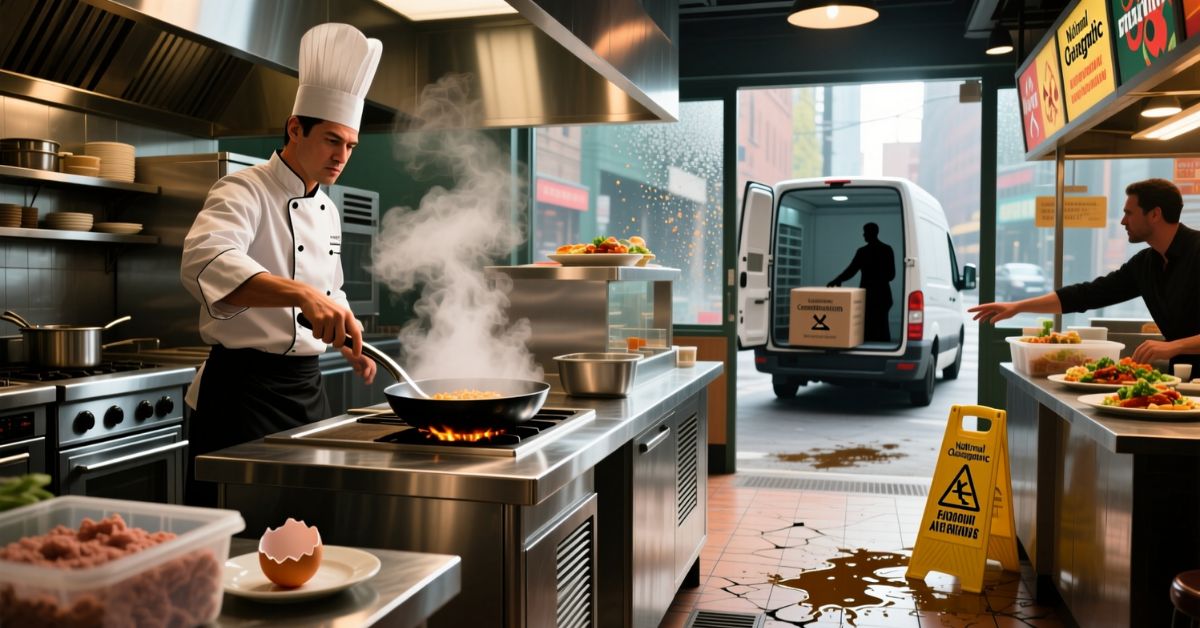
The business of running a food service comes with big rewards as well as huge risk. From claims for foodborne illnesses to slip-and-fall injuries, one accident could disrupt your business and deplete your bank account. This is why insurance coverage to protect food-related business owners isn’t a luxury It’s a fundamental protection.
In this guide, you’ll find out the specifics of this insurance and how it will protect your restaurant or food business as well as the cost of it and how to pick the best policy for your needs with confidence.
Why Liability Insurance Matters for Every Food Business
If you operate a food truck, bakery or catering service, or a full-service restaurant, your day-to-day business operations are exposed to customer dangers. Like other businesses food-related business risks, those in the food industry can increase rapidly and quickly, especially when health and safety concerns are concerned.
The Real Risks Food Businesses Face
- Foodborne illness accusations (even even if you’re not in the wrong)
- Injuries to customers in your establishment
- Damage to kitchens rented and event space
- Allergic reactions triggered by the ingredients
- Spills and burns as well as equipment-related incidents
- Contamination issues during transport
A single case can result in thousands of dollars in legal costs in the event of a single claim. As per the FDA Foodborne illnesses affect 48 million Americans annually, making Food industry an often-target of lawsuits. Insurance can help prevent these problems from turning into financial catastrophes.
What Liability Insurance for Food Business Typically Covers
1. General Liability Insurance
This is the basis of the majority of policies. It usually will cover:
- Customers’ injuries (e.g. when someone slips on a floor that is wet)
- Property damages resulted from your actions
- Advertising injury (e.g., claims of copyright or slogan misuse)
This coverage will save you from having to pay in cash for costly settlements or lawsuits.
2. Product Liability Insurance
If a consumer claims they fell ill due to eating your food item, then product liability is involved. It includes:
- Food poisoning claims
- Allergic reaction claims
- Contamination-related lawsuits
- Errors in manufacturing or preparation
Food-related cases typically require multiple parties – distributors, suppliers or even the preparation staffand this makes this protection crucial, especially when you sell packaged food items or have multiple locations.
3. Commercial Property Liability
This will protect any physical property of the company It includes:
- Kitchen equipment
- Refrigerators and freezers
- Ovens and prep stations, as well as utensils
- Supplies and inventory
If there is a fire in your kitchen, or an appliance malfunction destroys your inventory, this procedure can help you recuperate quickly.
4. Workers’ Compensation Insurance
Food companies typically require physical labor. Workers’ compensation protects:
- Accidents to employees
- Unemployment
- Medical bills
Even if your company isn’t large the coverage is crucial for compliance with the law and protection of employees.
5. Liquor Liability Insurance
This safeguards customers from accidents caused by alcohol which is a frequent cause of lawsuits for restaurants and bars.
How Much Does Liability Insurance for Food Business Cost?
Pricing can vary depending on the company’s size or location as well as risk, but these are the typical price ranges:
- Small food business (food trucks and bakery stores):
$600-$1,500 per year - Medium-sized caterers or restaurants:
$1,500-$5,000 a year - High-risk operation (bars seafood restaurants and huge locations):
More than $5,000 annually
Factors that affect cost:
- Revenues per year
- The type of food that is that is served
- Employees number
- Equipment used
- History of claims
- No matter if you serve alcohol
Tips: Bundling several coverages in an BOP (BOP) can significantly lower expenses.
Choosing the Right Liability Insurance: What to Look For
All policies are not all created to be equal. Here’s how you can make a better, more informed decision.
1. Evaluate Your Actual Risks
Different companies have different exposures to:
- Food trucks: mobility risk, generator dangers
- Bakery heating and related equipment hazards
- Catering service: off-site liability
- Restaurants: high customer traffic and food security concerns
Be sure that your policy is aligned with the reality of your everyday operations.
2. Check the Exclusions Carefully
Common exclusions to be on the lookout for:
- Spoilage that is not documented as a failure of equipment
- Intentional misconduct
- Undeclared alcohol service
- Food safety processes that are not properly documented
Always seek out your agent’s assistance to clarify any unambiguous exclusions.
3. Confirm That Product Liability Is Included
Certain general liability policies don’t cover food-related claims. Make sure that liability for products is included or included to the rider.
4. Understand the Coverage Limits
Small businesses typically choose:
- $1M limit per occurrence
- $2M aggregate limit
If you are in a highly-risky environment or in a high-traffic zone, think about an increase in the limits.
5. Look Into Additional Protective Add-ons
These may provide better coverage:
- Insurance for breakdown of equipment
- Insurance for Spoilage
- Commercial auto insurance (if you deliver food)
- Umbrella policies for extended coverage
Real Example: How Liability Insurance Saved a Restaurant
A tiny brunch establishment located in Texas was hit with a claim of $42,000 from a client who complained of foodborne illness following eating eggs that were not cooked properly. The investigation concluded that the restaurant was not at fault however the legal costs from mounting in.
Because the restaurant was covered by insurance for product liability that covered legal expenses, all legal costs were covered and the company was required to pay the cost of $0 out of their own pocket. Without the insurance, one incident could have shut the doors.
How to Reduce Liability Risks Before They Become Claims
Insurance is vital but preventing the occurrence of incidents at all costs is more effective.
Best Practices:
- Make a written food safety program
- Train staff on allergen awareness
- Maintain temperature logs for freezers and refrigerators.
- Keep floors dry and clean to prevent slip-hazards
- It is important to clearly label ingredients and possible allergens
- Make sure to schedule regular maintenance for your equipment.
- Make sure you wear gloves and follow the proper handwashing procedures
These methods not only lower risks, but can assist in lowering insurance premiums.
Conclusion
The best insurance policy to protect food-related business owners provides assurance and security in a business where risks are always present. If you own a small food cart or have a restaurant with multiple locations the liability insurance will ensure that you are able to handle claims from customers as well as property damage or unexpected events without risking your business’s financial security.
Actionable Learn from it:
Review your current protection (or the absence of it) in the coming week. Examine risk gaps and compare policies. You can then select the level of protection that best suits your business’s requirements.
FAQ’s
1. What kind of insurance does an establishment in the food industry require?
Food businesses in general need general liability as well as product liability, commercial property, as well as Workers’ Compensation. If there is alcohol served it is vital.
2. Do you require liability insurance for small food companies?
It’s contingent on the state you’re in and your business model, however most landlords, venues for events and commercial kitchens need the proof for liability coverage.
3. What do product liability insurance policies protect in a food industry?
It covers claims relating to foodborne illnesses foodborne illness, foodborne illness, allergic reactions or other errors in the preparation of food that are related to the foods you sell or serve.
4. What amount of liability insurance should the restaurant have?
The majority of restaurants have $1M-2M protection, but businesses with high risk may require greater limits.
Disclaimer:
The content on Gap Insurance Guide is for informational and educational purposes only and is not legal, financial, or insurance advice. While we strive for accuracy and reference trusted sources and news websites, we make no guarantees about the completeness or reliability of the information. Insurance laws and policies vary by state, and individual circumstances differ. Always consult a licensed professional before making decisions. By using this site, you agree that Gap Insurance Guide is not responsible for any actions taken based on this content.